

Runner’s Knee: The One Exercise Every Runner Needs to Know
Whether you’re training for a 5K, hitting the trails on weekends, or building up miles for a marathon, runner’s knee is one of the most common, and frustrating, injuries that can sideline you. The good news? With the right strength work, it’s largely preventable.
We thought it was time to revisit our favourite exercise to both prevent and remedy runner’s knee: the Poliquin step-up.
What Is Runner’s Knee?
Runner’s knee is most commonly caused by an imbalance in the quadricep muscles: specifically when the vastus lateralis (the muscle on the outside of the quad) overpowers the VMO (vastus medialis oblique), the teardrop-shaped muscle on the inside of the quad just above the knee. This imbalance causes the patella (kneecap) to track out of line, leading to pain that can range from a dull ache to something that stops your training altogether.
How to Address Runner’s Knee
Our first recommendation is soft tissue work: foam rolling the quadriceps to release tightness and restore normal muscle function. From there, the focus should be on a structurally balanced strength programme that directly targets the VMO, corrects muscular imbalances, and gets you back to pain-free running.
The Poliquin Step-Up: Our Top Exercise for Runner’s Knee
The Poliquin step-up is our number one exercise for runner’s knee prevention and recovery. It directly strengthens the VMO – the muscle responsible for extending the knee and protecting it every time your foot hits the ground.
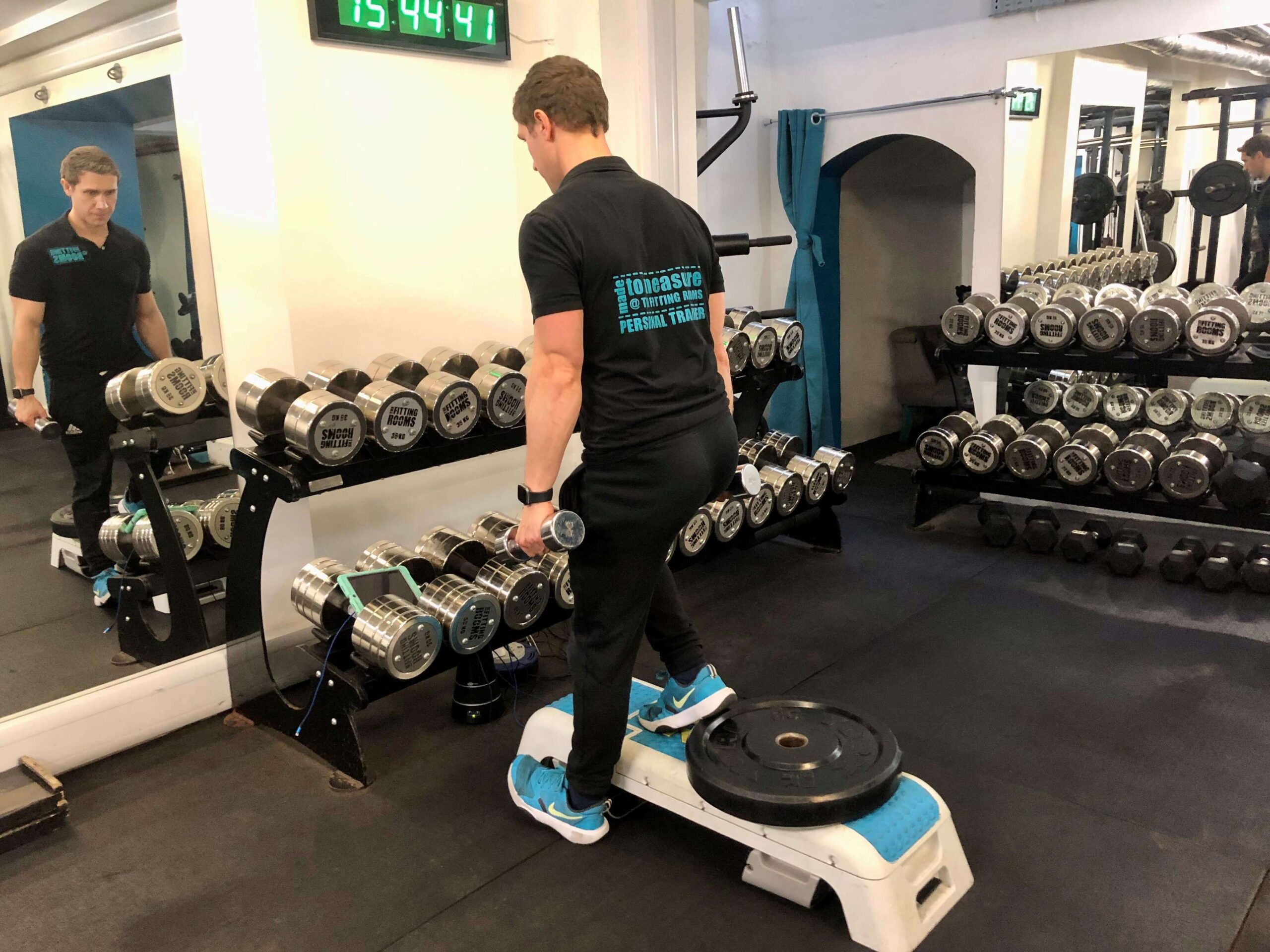
How to perform the Poliquin Step up
• Place one foot on a step with your heel elevated as high as possible (a bumper plate under the heel works well)
• Keeping your hips square, slowly lower the heel of your other foot down in line with the toe of the elevated foot
• Due to the short range of movement, build up to 20 reps each side to achieve adequate time under tension.
• Once you can perform 20 body weight reps with strict form, you can start to load the movement by holding a dumbbell in each hand.
As a bonus, the Poliquin step-up also engages the gluteus medius as a stabiliser – a muscle that, when weak, is frequently linked to both knee pain and lower back pain. So you’re tackling two common running complaints in one movement.
Why This Matters for All Runners
You don’t need to be marathon training to benefit from this exercise. Any runner logging regular miles is placing repetitive load through the knee joint, and muscular imbalances can develop gradually and silently, until they don’t.
That said, if you are building up to a marathon, this becomes even more critical. The volume of training required means imbalances that might otherwise stay quiet will almost certainly surface. Getting ahead of them now is far smarter than managing an injury mid-block.
We can’t stress enough how effective the Poliquin step-up is for building a resilient knee. Incorporated into a well-structured strength programme, it will meaningfully reduce your injury risk and unlock greater performance potential, whatever distance you’re running.
The progression from the Poliquin Step-Up is the Peterson step-up, which is a more advanced version of the movement, which still acts to prevent runners knee. View our exercise video HERE.



Leave A Comment